
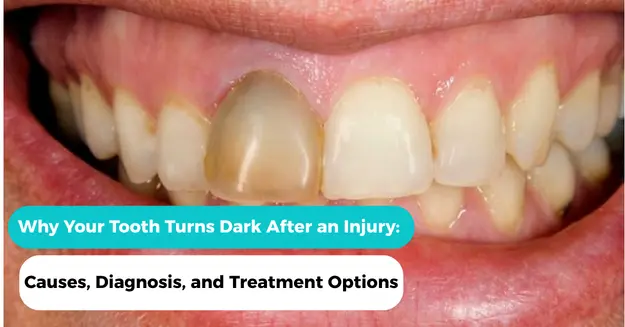
Imagine getting into a conflict and receiving a punch to your teeth, or accidentally hitting your mouth while working. A few days later, you notice that one of your teeth has turned gray, brown, or even black. It’s alarming, and your first instinct might be to wait and hope it returns to normal. However, tooth discoloration after trauma is often a sign that the tooth’s nerve and blood vessels in the pulp have been damaged, potentially leading to pulp necrosis, or tooth death.
Early action is crucial. If left untreated, a discolored tooth can worsen, develop an infection, affect your bite, or even result in tooth loss.
Key Takeaways
- Tooth darkening after trauma is common and often indicates internal damage such as pulp necrosis or internal bleeding.
- Early dental evaluation is crucial to prevent complications, preserve the natural tooth, and guide appropriate treatment.
- Symptoms may be minimal or absent, so noticing a color change alone should prompt a visit to the dentist.
- Treatment options include root canal therapy, internal bleaching, veneers/crowns, or extraction if the tooth cannot be saved.
- Preserving the natural tooth is always preferred over extraction and replacement with implants or dentures.
Causes of Black Tooth Discoloration After Trauma
When a tooth darkens after trauma, several internal changes may be occurring. Here are the most common causes:
1. Pulp Necrosis (Tooth Death)
The pulp is the soft tissue inside your tooth, containing nerves and blood vessels. If trauma damages the blood supply to the pulp, it may die, leading to pulp necrosis. When the pulp dies, internal tissues start to break down, causing the tooth to darken from the inside out[1]. This darkening is often gray or black in color and is typically permanent unless treated.
2. Internal Bleeding in the Tooth
Sometimes, trauma causes bleeding inside the tooth, especially if blood vessels are damaged. As the blood breaks down, pigments from hemoglobin seep into the dentin, the layer beneath the enamel, giving the tooth a grayish or dark appearance. This type of discoloration may appear weeks or months after the injury.
3. Calcification Changes
Trauma can also trigger calcification in the pulp or dentin, making the tooth harder and more brittle. These calcified areas can alter the way light passes through the tooth, creating a yellow, brown, or even black appearance over time.
Symptoms Accompanying Discoloration

Interestingly, a black or darkened tooth is often asymptomatic, meaning you may notice only the color change and nothing else. According to the American Association of Endodontics, pulp necrosis by itself does not cause apical periodontitis (infection at the root tip) unless the canal is infected[2]. This means pain is not always present immediately.
Other symptoms may include:
- Swelling or tenderness of gums: If the pulp becomes infected, your gums may become red, tender, or swollen.
- Tooth sensitivity or pain: This can range from mild discomfort to intermittent sharp pain, particularly when biting or exposed to temperature changes.
- Pus discharge from your gum or a sinus tract: This occurs when an infected tooth root forms a small drainage pathway to release pus. It’s a sign of a long-standing infection and requires urgent dental treatment.
Because symptoms can be minimal, paying attention to visual changes in your teeth is essential. Even if the tooth feels fine, a darkened color should not be ignored.
Diagnosis
Proper diagnosis is crucial for choosing the right treatment. Dentists use a combination of tools and tests to determine whether a tooth has pulp necrosis or another underlying issue:
1. Clinical Examination
The dentist will examine the tooth for color changes, check for mobility (looseness), and look for signs of trauma or gum inflammation.
2. Pulp Vitality Testing
This involves using cold, heat, or electrical stimuli to test whether the pulp inside the tooth is alive. A non-responsive tooth often indicates pulp necrosis[3].
3. Radiographs (X-rays)
X-rays help assess internal damage, detect infections, and evaluate the root structure. They are essential for planning treatment, particularly if a root canal may be needed.
Early and accurate diagnosis can prevent further complications, preserve the natural tooth, and guide appropriate aesthetic treatment if needed.
Treatment Options
The treatment of a darkened tooth depends on the cause and severity of the damage. Here are the common approaches:
1. Root Canal Therapy
If pulp necrosis is confirmed, a root canal treatment is usually recommended. This procedure removes the dead pulp, cleans and disinfects the canal, and then seals it. Root canal therapy can save your natural tooth, prevent infection, and stop further discoloration. To learn more about how root canals preserve your natural teeth in detail, check out our Root Canals Treatment Guide.
2. Internal Bleaching
After a root canal, internal bleaching can be used to lighten the tooth from the inside. This procedure can significantly improve the tooth’s appearance, especially if the darkening is severe[4].

3. Veneers or Crowns
If discoloration persists after bleaching or the tooth structure is compromised, veneers or crowns may be used for aesthetic restoration. These options restore the natural look of your tooth while providing protection[5].
4. Tooth Removal (Extraction)
In cases where the tooth is too damaged to save, extraction may be necessary. If a tooth must be removed, discuss replacement options with your dentist, such as dental implants or dental bridges. However, whenever possible, preserving your natural tooth is preferable, as it maintains natural bite function, jawbone structure, and aesthetics.
Prevention & Follow-Up
Preventing complications after dental trauma and maintaining a darkened tooth requires vigilance:
- Seek immediate dental care after trauma, even if the tooth feels fine. Early intervention often allows preservation of the natural tooth.
- Avoid chewing hard foods on the injured tooth until it is examined and treated.
- Regular checkups allow your dentist to monitor any color changes, detect pulp or root problems early, and plan treatment as needed.
Conclusion
A darkened tooth after trauma can be alarming, but it is often treatable. Timely evaluation and intervention are key to saving your natural tooth, preventing infections, and restoring aesthetics.
If you notice discoloration, don’t wait for the tooth to “heal” on its own. Schedule an appointment with a qualified dentist or endodontist to assess the damage, determine the cause, and discuss treatment options. Preserving your natural tooth should always be the primary goal, with extraction being a last resort.
FAQ
Yes, primary teeth can also discolor after trauma. While some changes may resolve as the tooth naturally exfoliates, early dental evaluation and getting a treatment such as pulpectomy is recommended to prevent infection or impact on developing permanent teeth.
Not usually. Discoloration often indicates internal changes such as pulp necrosis or internal bleeding. Without treatment, the tooth may remain dark and could eventually develop an infection.
This is a sign of infection. When a pulp dies and bacteria enter the canal, it can lead to abscess formation, producing pus, swelling, and bad odor. Immediate dental treatment, usually a root canal or extraction, is necessary.
Trauma-related darkening often has a history of injury, may be localized, and develops gradually. Other causes of black discoloration, such as decay, staining, or systemic conditions, have different patterns, locations, and associated symptoms. A dentist can determine the cause through examination, tests, and X-rays.
Whenever possible, preserving your natural tooth with a root canal is preferred. Natural teeth maintain jawbone health and function better than implants or dentures. Implants are excellent alternatives when a tooth cannot be saved, but saving the tooth is usually the best first choice.
Yes, in some cases, a tooth can become dark, gray, pink, or black after root canal treatment. This usually happens when blood pigments or remaining pulp tissue stay inside the tooth after treatment. During a root canal, the infected pulp tissue inside the tooth must be completely removed and the canals thoroughly cleaned. If small amounts of blood or tissue remain trapped inside the dentinal tubules, they can cause internal discoloration over time. Another possible cause is the type of root canal filling materials or sealers used during treatment, as some materials may contribute to tooth discoloration. Trauma to the tooth before treatment can also play a role in color changes.
References
1, Abdulwahab, M. A., Alqahtani, M. S., Alshammari, A. A., Jiffri, S. E., Alasim, A. M., Alsharidah, F. M., Alqunfuthi, N. I., Alnamnakani, B. A., Alshahrani, R. S., Alshahrani, N. A., Aljohani, R. N. and Almintakh, M. A.-L. (2021) “Etiologies, risk factors and outcomes of dental pulp necrosis”, International Journal Of Community Medicine And Public Health, 9(1), pp. 348–352. doi: 10.18203/2394-6040.ijcmph20214793.
2,https://www.aae.org/specialty/wpcontent/uploads/sites/2/2017/07/endodonticdiagnosisfall2013.pdf
3, Jafarzadeh H, Abbott PV. Review of pulp sensibility tests. Part II: electric pulp tests and test cavities. Int Endod J. 2010 Nov;43(11):945-58. doi: 10.1111/j.1365-2591.2010.01760.x. Epub 2010 Aug 18. PMID: 20726917.
4, Jin Y, Paranhos KS, Salamone A, et al. Internal Tooth Whitening. [Updated 2024 May 7]. In: StatPearls [Internet]. Treasure Island (FL): StatPearls Publishing; 2025 Jan-. Available from: https://www.ncbi.nlm.nih.gov/books/NBK603756/
5,Karimi, M., Hashemikamangar, S. S., & Farahani, S. (2023). Veneer crowns in anterior endodontically-treated teeth: A case report with 1-year follow-up. Clinical Case Reports, 11(11), e8084. https://doi.org/10.1002/ccr3.8084

