

Regular dental checkups are key to maintaining great oral health. One crucial part of these checkups is dental X-rays especially bitewing X-rays, which provide a clear view of your teeth’s biting surfaces and help catch problems early.
What Is a Bitewing?
A bitewing is a type of dental X-ray that shows the biting surfaces of the upper and lower teeth. The term “bitewing” refers to how patients bite down on a thin, flat sensor or X-ray film that is held in position by a device. Bitewing radiographs allow your dentist to see the areas between your teeth and the upper and lower teeth’ contact points most susceptible to decay.
5 Types of Dental X-rays
There are several types of dental X-rays, each with its unique purpose. Here’s a quick look at the most common ones:
1. Bitewing X-Rays

Bitewing X-rays are the most common type of dental X-ray. These radiographs capture images of the upper and lower back teeth, showing the crown portions of the teeth and the height of the alveolar bone. These X-rays are used to detect cavities and bone loss.
2. Periapical X-Rays

Periapical X-rays capture images of one or two teeth, from the crown to the root. These X-rays are used to diagnose specific dental problems; such as tooth root infections or bone loss around the tooth.
3. Full Mouth Survey X-rays

Full mouth survey X-rays, also known as FMS or complete series X-rays, are taken as a baseline of your oral health. The X-ray captures a series of individual images, including a combination of bitewing and periapical, showing the teeth and the bones that support them. This type of X-ray is useful in detecting impacted teeth, cysts, tumors, and bone abnormalities.
4. Panoramic X-rays

A panoramic X-ray captures a broad view of the entire mouth, including the teeth, jaws, temporomandibular joints (TMJ), and sinuses. This X-ray is useful in detecting dental problems that may not be visible with other types of X-rays.
To take a panoramic X-ray, you’ll be asked to bite down on a “bite blocker” to keep your teeth aligned and obtain a clear image. Then, a rotating arm on the machine makes a semi-circle around your head to record your mouth.
5. CBCT (Cone Beam Computed Tomography)
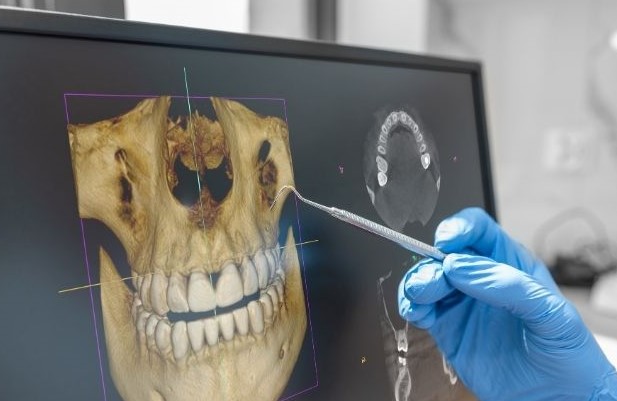
Provides 3D imaging of dental structures, soft tissues, nerve paths, and bone. It’s essential for complex diagnostics, implant planning, and evaluating any anatomical abnormalities
Bitewing Radiographic Technique

During your dental appointment:
- Your dentist or hygienist positions a bitewing sensor or film in your mouth.
- You bite down on a small, wing-like device to hold the sensor in place.
- The device is repositioned as needed to capture images from different angles.
Before the procedure, you’ll be asked to remove eyeglasses, dentures, or any items that might interfere with the X-rays.
How Bitewing X-Rays Benefit Your Dental Health
Bitewing radiographs are essential during routine dental visits because they:
- Detect Early Dental Caries: Catch cavities in their earliest stages for minimally invasive treatment.
- Identify Periodontal Disease: Reveal early signs of gum disease affecting both teeth and bone.
- Spot Other Dental Issues: Uncover problems such as impacted teeth or abscesses before they worsen.
When Are Bitewing Radiographs Necessary?
The frequency of bitewing X-rays depends on your individual dental health:
- Adults: Typically recommended every 1–2 years.
- Children: Often need them more frequently.
- Special Circumstances: If you’re experiencing dental pain, sensitivity, or undergoing orthodontic treatment, your dentist may advise more regular X-rays.
Risks of Bitewing Radiographs
While bitewing radiographs involve radiation exposure, the amount of radiation in a bitewing radiograph is minimal and comparable to what you would be exposed to in everyday life. Additionally, your dentist will take steps to minimize your exposure to radiation, such as using a thyroid collar and lead apron to protect the rest of your body.
Bitewing vs. Full-Mouth X-Rays
Bitewing X-Rays
- Captures the upper and lower back teeth, focusing on the biting surfaces and contact areas.
- Early detection of dental issues such as cavities and gum disease.
- Typically used during routine dental check-ups for early-stage diagnostics.
- Offers a detailed view of specific areas most prone to decay.
- Generally recommended every 1–2 years for adults (more frequently for children, depending on individual need.
Full-Mouth X-Rays
- Provides a comprehensive view of all teeth by combining bitewing and periapical images.
- Sets a baseline for oral health and enables detailed exams.
- Often employed for new patient assessments or when a more extensive evaluation is required.
- Delivers a broader overview, capturing both crown-to-root images and bone structures.
- Taken less frequently; primarily for initial evaluations or when a comprehensive diagnostic is needed.
Frequently Asked Questions
It’s a dental X-ray that captures images of the upper and lower teeth and their supporting bone structure perfect for early detection of cavities and gum disease.
Typically once a year during routine check-ups, but your dentist may recommend more frequent scans based on your dental history.
Yes, bitewing X-rays are considered safe with low levels of radiation exposure. The amount of radiation exposure from a bitewing X-ray is minimal, and proper precautions are taken to minimize the risk of exposure.
You’ll bite down on a small device that holds the sensor or film in place while the X-ray machine captures images of your teeth
Usually, 2 to 4 images are captured during your appointment, depending on your needs.

