
Emergency Dental Insurance: What Does It Cover and How Much Does It Cost?
Dealing with a dental emergency is awful enough as it is, but what can you do if your insurance doesn’t cover dental emergencies?
To help you better understand emergency dental insurance, we’ve compiled information on how to get coverage for emergency services and how to make treatment more affordable.
Key Takeaways: Emergency Dentist Insurance
- Dental emergencies are unexpected problems with your teeth or jaw that require urgent treatment.
- A dental emergency may require a visit to your regular dentist, an after-hours clinic or a hospital emergency department.
- Dental insurance may cover emergency treatment, but coverage depends on your plan, deductible, annual maximum and network restrictions.
- If you don’t have dental benefits, there are several types of free or low-cost clinics, including dental schools, charities and publicly funded services.
- Credit and payment plans are other options if you do not have a suitable dental plan.
- Practicing good oral hygiene and protecting your teeth during sports can help prevent some dental emergencies.
What Is an Extreme Dental Emergency?
A dental emergency is an unexpected dental health problem that requires immediate or urgent treatment. Common dental emergencies include:
- Dental injuries: These include a chipped tooth or one or more cracked teeth.
- Knocked-out or displaced teeth: It is essential to see a dentist as soon as possible to maximize the chances of saving the tooth.
- Sudden, severe tooth pain: This may indicate an injury, deep decay or infection. Intense, throbbing pain can be a sign of inflammation or infection that needs prompt assessment.
- Injuries to the gums, cheek, tongue or lips: These can initially appear worse than they really are because saliva can make bleeding seem more severe. However, heavy or persistent bleeding may require urgent medical or dental attention.
- Lost crowns or fillings: These can cause pain because the damaged part of the tooth may be exposed. Tooth decay or a fractured tooth may also cause a restoration to become dislodged, requiring further treatment.
- Jaw injuries: These may range from temporomandibular joint (TMJ) problems to a jaw fracture. Severe injuries may require hospital treatment or surgery.
The term “extreme dental emergency” may describe any emergency, or only the most serious issues, such as fractures or potentially life-threatening infections. Everyday or workplace accidents, car accidents and even biting on a hard object can lead to dental emergencies.
Seek emergency medical care immediately if you have difficulty breathing or swallowing, rapidly spreading facial or neck swelling, or serious facial trauma. Uncontrolled bleeding also requires urgent attention. Do not delay treatment while checking your insurance coverage.
If you have insurance, your coverage for the necessary treatment will likely vary depending on the nature of the care you need. Read more about dental insurance plan levels and how they affect treatment coverage.
Can I Go to Any Dentist for Emergency Treatment?
Not every dentist is available for emergency treatment, and it can be even more difficult to find a dentist during closed hours. However, many dentists provide contact details for after-hours or on-call services when they are unavailable.
In some cases, you may need to visit a hospital instead. Fractures, serious jaw injuries, deep facial cuts and infections that affect your ability to breathe or swallow require emergency medical assessment.
For most tooth-related problems, such as a broken or knocked-out tooth, severe toothache or dental abscess, a dentist is generally the most appropriate professional to provide definitive treatment.
If you only have health insurance with no dental coverage, do not assume that it will pay for dental procedures such as having a tooth reinserted or extracted. A hospital emergency department may provide initial assessment and treatment for serious complications, but definitive dental treatment may still be necessary. Coverage depends on your medical insurance policy and the circumstances of the emergency.
If you have dental insurance, your insurance company may have a provision for emergency services. For example, Delta Dental explains how emergency dental treatment may be covered, including when you are away from your regular dentist. However, out-of-network treatment may not be covered under some plans.
Dental plans have varying coverage for emergencies, so it is best to read the fine print. Check your plan documents or contact your insurer to confirm coverage before treatment, if the situation allows. Ask about emergency examinations, X-rays, extractions, root canal treatment, out-of-network fees and any applicable waiting periods.
If you are still researching dental plans, read our Ameritas Dental Insurance review to learn more about dental coverage options and benefits.
Dental Emergency Medicaid
If private insurance plans are out of your price range, Medicaid may be an option if you live in the United States and meet the eligibility requirements.
However, Medicaid dental benefits for adults vary by state. Some states provide emergency-only dental coverage, while others cover a wider range of services. There is no single nationwide rule guaranteeing the same emergency dental benefits for every adult enrollee.
Children enrolled in Medicaid receive dental benefits that include the relief of pain and infections, restoration of teeth and maintenance of dental health. CHIP also provides dental benefits for eligible children, with coverage depending on the program.
To check your eligibility and available benefits, visit the official Medicaid dental care website or contact your state Medicaid office.
Where Can I Get Emergency Dental Care Without Insurance?
You can check out the following options for emergency dental care without dental insurance:
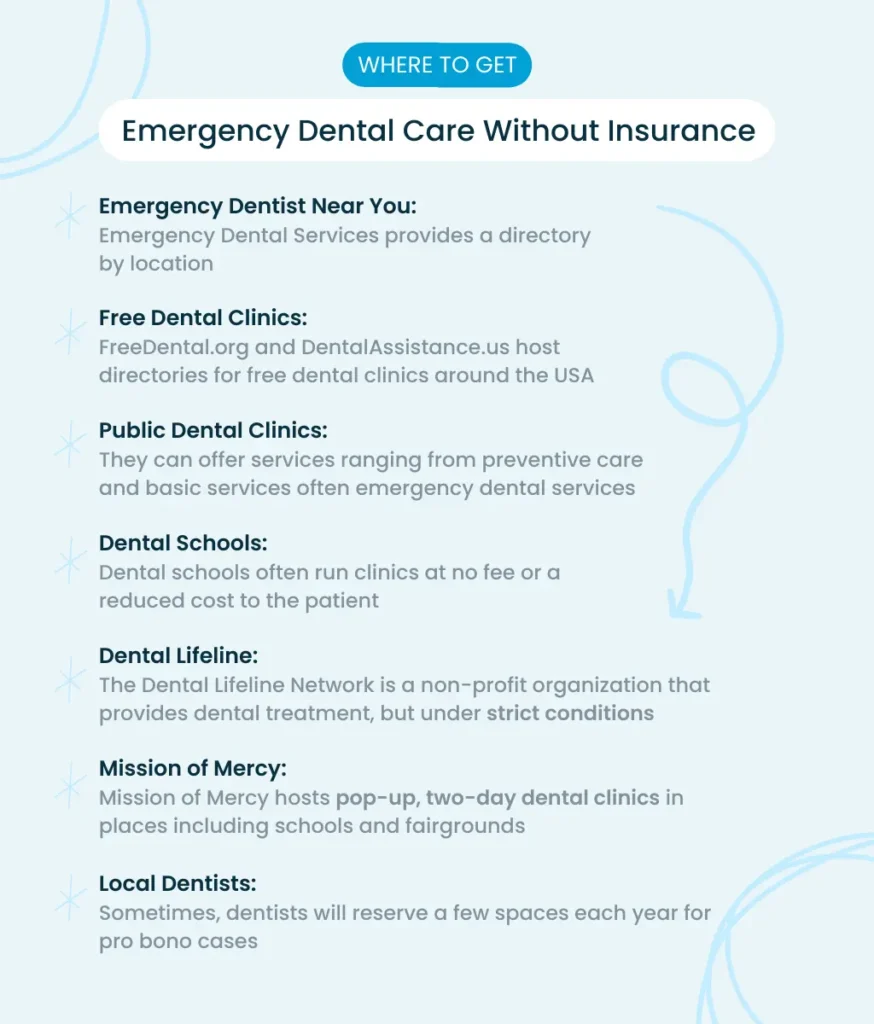
- Emergency dentists near you
- Free dental clinics
- Publicly funded dental clinics
- Dental schools
- Dental Lifeline Network
- Mission of Mercy events
- Local dentists offering reduced-cost treatment
Whether you cannot afford dental benefits or your dental plan has a waiting period that you haven’t yet met, there may be options for treatment. Some programs have eligibility criteria involving age, income or disability, while others are available to a wider range of patients.
Emergency Dentist Near Me
There are several online directories that can help you find an emergency dentist in your local area. Some emergency dental practices also offer financing or payment plans to help patients manage the cost of treatment.
Before booking an appointment, ask whether the clinic accepts patients without insurance, offers same-day appointments and provides a written estimate of the treatment costs.
One way to pay for dental treatment at participating clinics is through a healthcare financing option such as CareCredit. However, approval is not guaranteed, and financing terms vary. Review the interest rate, repayment requirements and any promotional conditions before agreeing to a payment plan.
Free Dental Clinics
Websites such as FreeDental.org and DentalAssistance.us provide directories of dental assistance programs in the United States.
However, some listings may only offer dental care for children through the Children’s Health Insurance Program (CHIP), or low-cost dental care through Medicaid. Depending on your needs, always check the eligibility requirements and services offered before making an appointment.
Additionally, some religious organizations, charities and professional associations provide donated or reduced-cost dental services. They typically have criteria such as income limits, age restrictions or specific health conditions.
Public Dental Clinics
Publicly funded dental clinics and community health centers may offer services ranging from preventive care and basic treatment to more extensive dental procedures. Some also provide emergency dental services.
In the United States, the Health Resources and Services Administration (HRSA) provides information about community health centers that may offer dental care at reduced costs. At many of these centers, fees are based on income.
Eligibility, appointment availability and the treatments offered vary by location. Contact the clinic to ask whether it can treat your specific dental problem and how much you may need to pay.
Dental Schools
Dental schools often run clinics that offer dental treatment at no cost or a reduced cost. Dental students provide treatment as part of their training under the supervision of licensed dental professionals.
Although appointments may take longer than they would at a private dental office, these clinics can be a useful option for patients who need affordable treatment.
To find a nearby dental school, search for universities that offer dental programs in your area. Ask whether the clinic accepts emergency cases, what treatments are available and whether there is a waiting list.
Dental Lifeline Network
The Dental Lifeline Network is a nonprofit organization that provides donated dental services to eligible people who cannot afford treatment.
Eligibility generally includes people who are 65 or older, have a permanent disability or are medically fragile, together with financial need. Requirements and program availability vary by location.
Because donated dental care may involve an application and a waiting period, contact the organization to determine whether the program can help with your situation. If you have a dental emergency, seek appropriate urgent treatment rather than waiting for a donated-care appointment.
Mission of Mercy
Mission of Mercy programs organize temporary dental clinics that provide free dental treatment to eligible patients in participating locations. Some events take place in schools, fairgrounds or other large venues.
Because these are temporary clinics, you will need to check upcoming dates, locations, available treatments and any eligibility requirements.
These events may be helpful if you cannot afford dental treatment, but they may not be able to provide every type of emergency procedure or treatment immediately.
Local Dentists: Check for Pro Bono Treatment
Sometimes, dentists reserve a limited number of appointments for patients who need treatment but cannot afford the full cost.
These services may be available through charitable programs, professional networks or individual dental practices. You may also be referred to another dentist who offers reduced-cost treatment.
Explain your financial situation honestly and ask whether the practice offers payment plans, discounts or referrals to local assistance programs.
How Much Does an Emergency Dentist Cost Without Insurance?
The cost of emergency dental treatment without insurance depends on the type of problem, the treatment required, your location and the dental practice you visit.
An emergency examination may cost much less than a procedure such as a root canal, surgical extraction or crown. If the problem requires X-rays, medication or additional treatment, the total cost may increase.
There is no single price that applies to every dental emergency. For an estimate, contact the dental practice and ask for the cost of the examination, necessary diagnostic tests and the likely treatment options.
Before agreeing to treatment, ask the dentist:
- How much will the emergency examination and X-rays cost?
- What treatment do I need immediately?
- Are there less expensive treatment options that are clinically appropriate?
- Can the treatment be completed in stages?
- Do you offer payment plans or reduced fees for patients without insurance?
- Will additional appointments or procedures incur separate charges?
If the clinic offers a payment plan, confirm the total cost, any interest or fees, the repayment period and the consequences of missing a payment.
You can also contact a community health center, dental school or local charity to ask about reduced-cost services. The HRSA guide to finding low-cost dental care provides further information about these options.
Other Tips to Save Money
To help manage unexpected dental costs and reduce the chances of needing emergency treatment, consider the following:
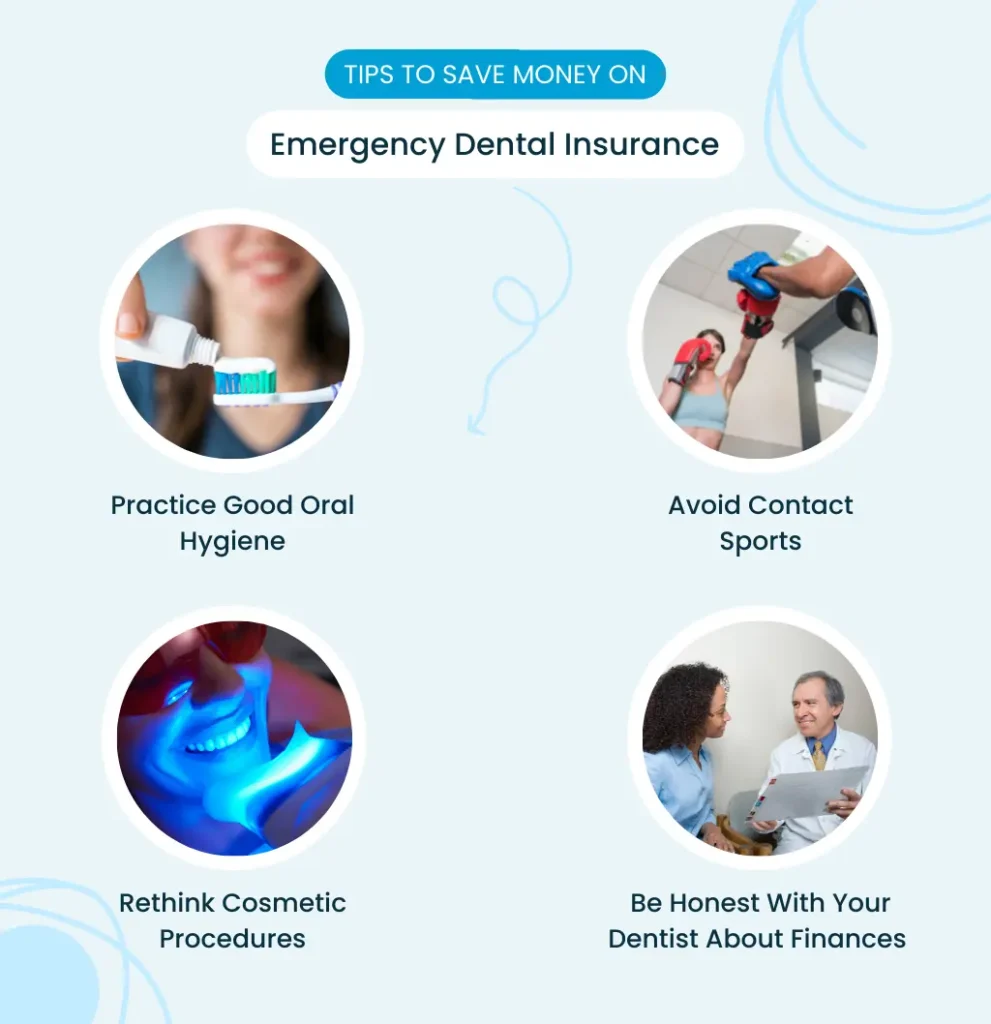
- Practice good oral hygiene.
- Avoid preventable sports-related injuries.
- Rethink elective cosmetic procedures when finances are limited.
- Be honest with your dentist about your financial situation.
Practice Good Oral Hygiene
Many dental insurance plans have an annual maximum, which is the most the insurer will pay toward covered dental services during a benefit year. Delta Dental notes that annual maximums commonly range from $1,000 to $2,000, although the amount varies by plan.
Once you reach your annual maximum, you may have to pay the full cost of additional covered treatment until your benefits reset. Your deductible, copayments and other out-of-pocket costs may also apply.
Practicing good oral hygiene is one of the best ways to maintain healthy teeth and gums. Brushing with fluoride toothpaste, cleaning between your teeth and attending regular dental visits can help prevent cavities and gum disease and reduce the likelihood of needing more extensive treatment.
Regular dental visits also allow your dentist to identify problems early, before they develop into painful or costly emergencies.
However, dental insurance policies differ in how they cover existing conditions and major procedures. Read your policy documents to understand any exclusions, limitations and waiting periods.
If you are still researching insurance policies, remember that some dental plans prioritize preventive care, while others provide broader coverage for basic and major procedures.
Avoid Contact Sports Injuries
Contact sports can lead to tooth and jaw injuries from a direct impact or from biting down during a fall.
Wear a properly fitted mouthguard when participating in sports where dental injuries are possible. Follow the appropriate safety rules and avoid training when fatigue may compromise your coordination.
Do not assume that sports-related dental injuries are automatically excluded from insurance. Check your policy for the applicable coverage and exclusions.
Rethink Cosmetic Procedures
Cosmetic procedures such as teeth whitening and veneers are usually not covered by traditional dental insurance when performed solely for aesthetic reasons. Orthodontic treatment may also have limited coverage or be excluded, depending on the plan.
If you are facing an unexpected dental expense, it may help to prioritize urgent treatment and postpone elective procedures until your finances allow.
Dental discount plans may offer reduced fees for certain cosmetic or restorative procedures. However, these plans are not the same as insurance: you generally pay the discounted fee yourself, and the discount depends on the plan and participating provider.
Before enrolling, check the services covered, participating dentists, membership fees and applicable restrictions.
Be Honest With Your Dentist About Finances
If you struggle to pay for dental care and do not have dental coverage, be honest with your dentist about your financial situation.
They may be able to discuss treatment options, arrange payments where available or refer you to a public clinic, dental school or charity-funded organization.
Do not delay urgent treatment simply because you are worried about the cost. Explain your concerns and ask which parts of the treatment need immediate attention.
FAQ
Free dental clinics, dental schools and charitable programs may offer free or reduced-cost treatment to eligible patients. Contact local community health centers to ask about emergency care and financial assistance.
Contact a dentist to ask about examination costs, payment plans and reduced-cost treatment. If you have facial swelling, fever with worsening symptoms, or difficulty breathing or swallowing, seek urgent medical attention.
Some dental insurance plans have no waiting period for certain services, while others require you to wait for basic or major treatment. Check the Cigna dental insurance plans and confirm exclusions, because a new policy may not cover an existing dental problem. You can also compare Ameritas and Humana dental insurance plans to understand their coverage options, waiting periods and benefits before choosing a policy.
Many dental insurance plans cover medically necessary tooth extractions, but your out-of-pocket costs depend on your plan’s benefits, deductible, annual maximum and waiting periods. Contact your insurer to confirm coverage before treatment, if possible.
Conclusion
Dental emergencies can cause unexpected pain, stress and expenses, especially if you don’t have dental insurance. Fortunately, options such as emergency dental clinics, dental schools, community health centers and charitable programs can help you access affordable treatment.
If you have dental insurance, check your policy to understand what emergency treatments are covered, including deductibles, waiting periods and annual limits. Whether insured or not, don’t ignore a dental emergency, as getting prompt treatment can prevent the problem from becoming more serious.

