
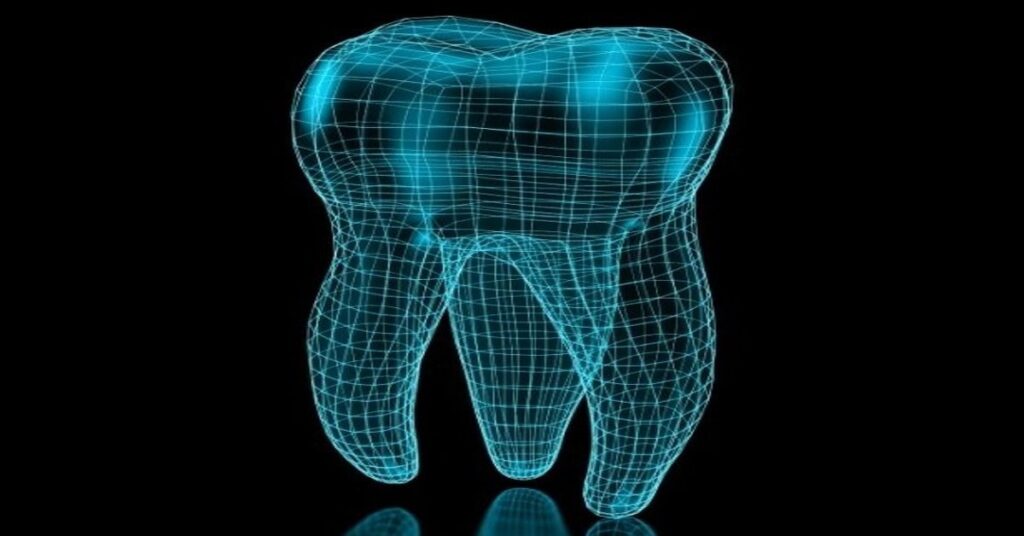
Tooth loss has always been seen as permanent. For decades, dentistry has relied on fillings, bridges, dentures, and implants to restore function and aesthetics. But what if patients could one day regrow their own teeth? Thanks to breakthroughs in regenerative medicine and stem cell research, the idea of tooth regeneration is moving from science fiction to scientific reality.
Can We Regrow Missing Permanent Teeth?
The short answer is: not yet, but soon. Humans only develop two sets of teeth: baby teeth and permanent teeth. Unlike sharks or elephants, which naturally regenerate multiple sets, our biology does not support continual replacement.
However, research at King’s College London has made remarkable progress in creating lab-grown teeth using a bioengineered environment that mimics natural tooth development (King’s College London). Scientists have successfully introduced materials that allow stem cells to “talk” to each other, triggering the process of forming tooth structures.
Meanwhile, Japanese researchers are running clinical trials on a drug that inhibits USAG-1 protein, which normally prevents new tooth growth (medpath). By blocking this protein, researchers have already stimulated extra tooth formation in mice and ferrets.
These findings suggest that regenerating missing permanent teeth in humans could become a clinical reality within the next decade.
What Are the Drugs to Regenerate New Teeth?
One of the most exciting drug candidates is the anti-USAG-1 antibody therapy. USAG-1 is a protein that suppresses tooth development. By neutralizing it, scientists have been able to encourage the growth of new teeth in animal studies.
The first human clinical trial of such a drug began in Japan in 2024, led by Toregem Biopharma (Toregem Biopharma). If successful, it could be used for patients who are congenitally missing teeth (a condition known as anodontia) or those who have lost teeth to decay or trauma.
Although early days, the results could transform the future of dentistry—offering a natural replacement instead of artificial restorations.
Lab-Grown Teeth vs. Traditional Dental Treatments
While drugs are one avenue, lab-grown teeth from stem cells represent another exciting approach. Instead of implants or prostheses, researchers are exploring how to grow a natural tooth in the lab and transplant it into the jaw (NIH).
Why Lab-Grown Teeth Matter
- Fillings and crowns eventually fail, weakening the tooth over time
- Implants, while durable, require invasive surgery and good bone quality.
- Lab-grown teeth could integrate with natural tissues, adapt over time, and avoid rejection risks.
Dr. Ana Angelova Volponi from King’s College London emphasizes that such regenerative solutions could offer a sustainable and biologically compatible alternative to traditional care (King’s Faculty of Dentistry).
The Role of Stem Cells in Tooth Regeneration
Stem cells are at the heart of this revolution. They have the ability to transform into multiple types of cells, including those needed to form dentin, pulp, and enamel-producing cells. Two Approaches Researchers Are Exploring
Transplanting Tooth Cells into the Jaw
Scientists could introduce early-stage tooth cells directly into the site of a missing tooth, allowing it to grow naturally within the mouth.
Growing Teeth Entirely in the Lab
Alternatively, researchers may cultivate a whole tooth in controlled conditions and then implant it into the patient’s jaw. Both methods aim to mimic natural tooth development, a process that involves complex signaling between cells.
Challenges Ahead in Tooth Regeneration
Despite exciting progress, several hurdles remain:
- Ensuring predictable growth of teeth in humans.
- Managing the time frame developing a tooth takes months to years.
- Overcoming regulatory and ethical concerns before mainstream clinical use.
Still, as regenerative medicine advances, these challenges are being tackled. Many experts believe clinical availability could emerge by the 2030s (Harvard School of Dental Medicine).
What Tooth Regeneration Means for the Future of Oral Health
If tooth regeneration becomes standard practice, it could reshape dentistry in several ways:
- Fewer extractions if damaged teeth can regrow naturally.
- Less reliance on implants and dentures, reducing the need for invasive surgeries.
- Improved patient acceptance, since natural teeth are always preferable.
The American Academy of Implant Dentistry estimates that nearly 5 million dental implants are placed annually in the U.S. (AAID Statistics). A shift toward regeneration would disrupt this multi-billion-dollar industry but also provide patients with a healthier, longer-lasting alternative.
FAQ
Not yet. But current research suggests tooth regeneration could become possible within the next decade. Early clinical trials, especially in Japan, show promising results for growing new teeth using drug-based therapies.
The leading candidate is an anti-USAG-1 antibody therapy. USAG-1 is a protein that suppresses tooth development. By blocking it, scientists have triggered new tooth formation in animals. Human trials began in 2024.
Yes, researchers have successfully grown early tooth structures in the lab using stem cells. These bioengineered teeth can potentially be implanted into the jaw in the future, though the process is still experimental.
The main challenges include controlling the shape, size, and timing of tooth development, ensuring safety in humans, and meeting regulatory standards before treatments can be widely offered.
If ongoing trials succeed, experts predict that clinical use may begin sometime in the 2030s. However, timelines depend on safety testing, regulations, and long-term success rates.

